
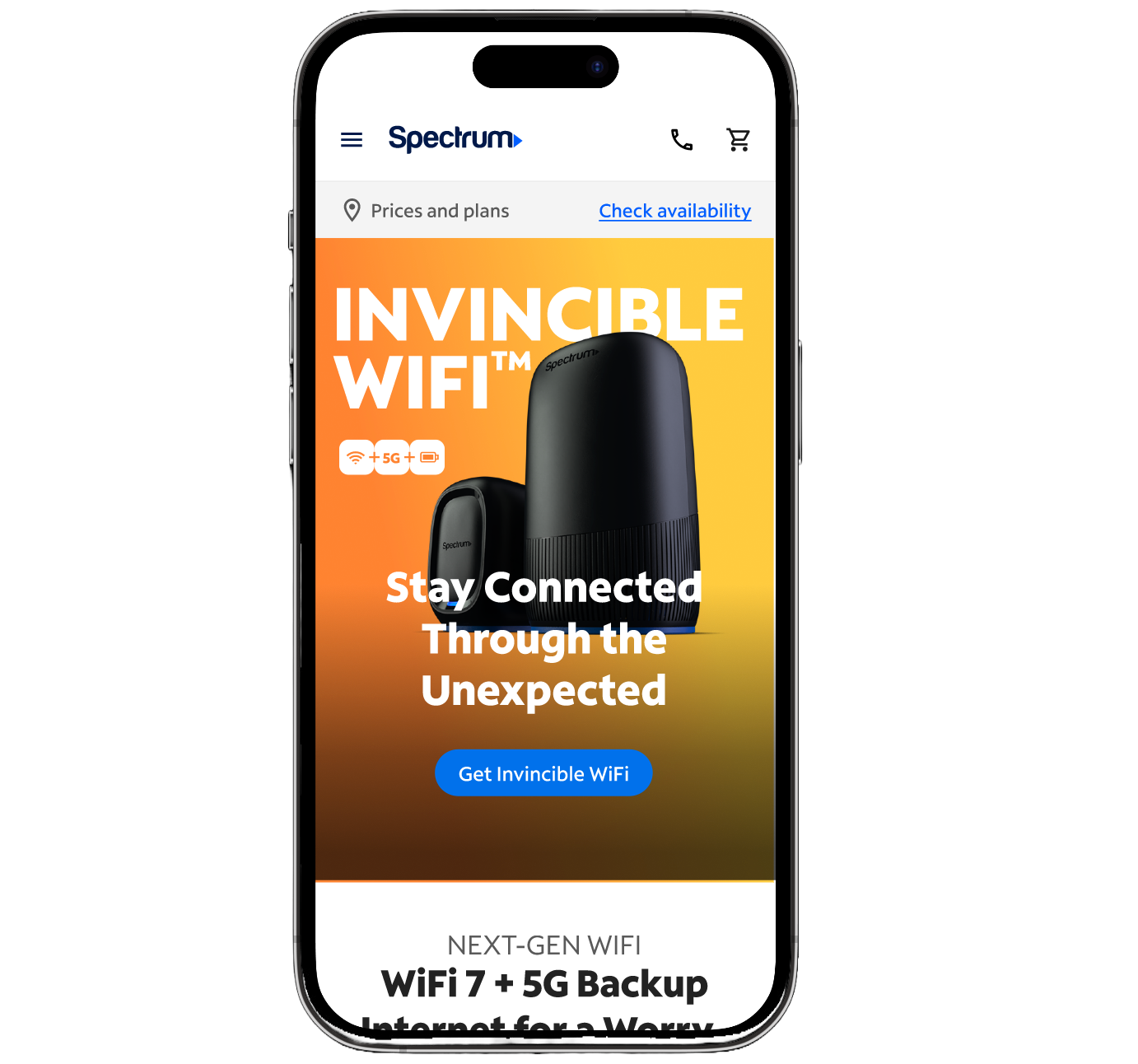
Reframing address validation from a conversion blocker into a personalized shopping experience
At a Fortune 70 telecom company, I led UX strategy and buyflow optimization efforts focused on one of the highest-friction points in the digital sales journey: localization.
Users were required to validate their address before viewing eligible internet, mobile, and bundle offers — but the existing experience disrupted shopping momentum and created significant abandonment risk, particularly on mobile.
The goal was to redesign localization into a more seamless, conversion-focused experience while balancing complex backend serviceability and offer eligibility requirements.
Snapshot
Role: UX Design Lead
Team: Digital Sales/E-commerce
Focus Areas: CRO, Localization, Buyflow Optimization, Mobile UX
Platform: Responsive Web
Why This Problem Mattered
Localization directly impacted:
conversion opportunity
package exploration
customer acquisition performance
The experience acted as a hard interruption in the buyflow:
users lost momentum
abandoned during address validation
hesitated to continue browsing plans
At the same time, the business required exact address validation because:
pricing varied by region
services depended on availability
offer eligibility relied on backend localization logic
This created a high-impact UX challenge: Reduce friction without compromising operational requirements.
My Role
As UX Design Lead, I drove:
UX strategy and interaction direction
Cross-functional stakeholder alignment
Buyflow optimization initiatives
Design prioritization across pods
Mobile-first experience improvements
Conversion-focused UX thinking
Design advocacy within Product and Engineering discussions
I partnered closely with:
Product Managers
Engineers
UX Researchers
Journey Owners
Business stakeholders
to align customer experience goals with technical feasibility and business priorities.
The Core UX Problem
The original experience relied heavily on modal-based address validation that interrupted browsing behavior and created unnecessary friction within the shopping journey.
Key Pain Points
Users felt blocked from exploring packages
Editing an address disrupted buyflow continuity
Mobile interactions created additional friction
Customers feared losing progress during localization
The experience felt transactional instead of personalized
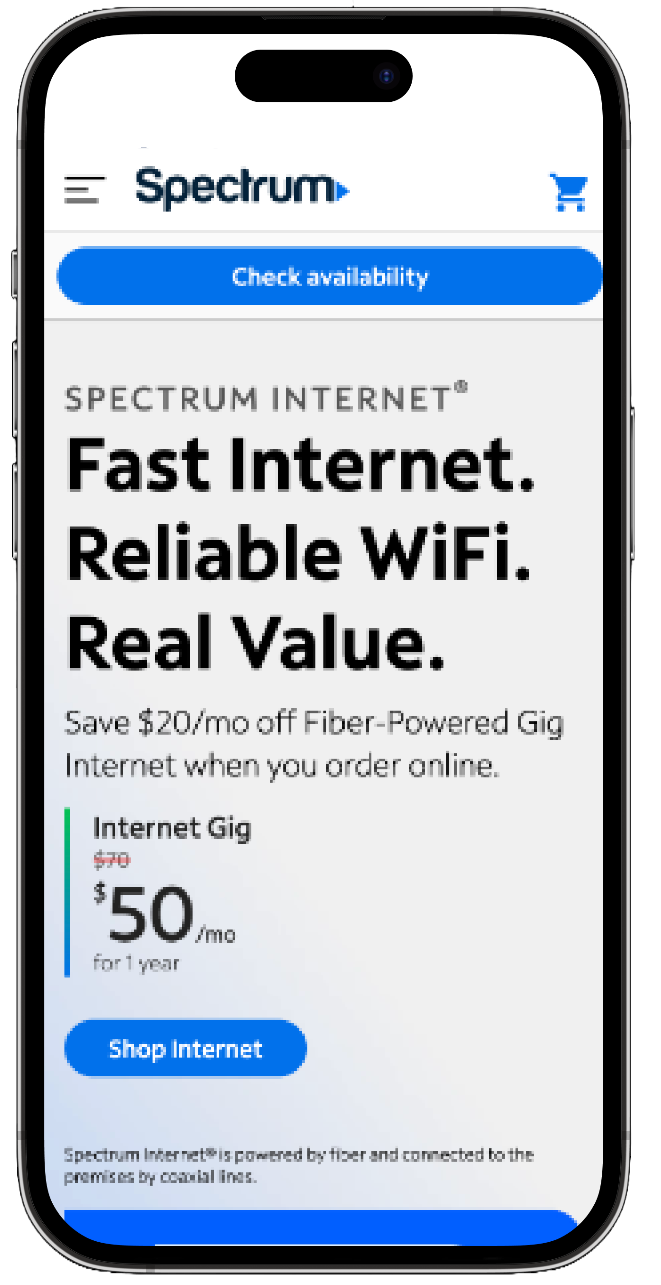
Original localization UI before we aligned on a new and improved design solution
UX Strategy
The strategy centered around transforming localization from:
“A required validation step”
into:
“A personalized shopping enablement experience”
Research & Key Insights
Working alongside UX Research, we identified several behavioral patterns contributing to abandonment.
Key Findings
Users wanted to browse before committing
Customers expected to explore plans and pricing before entering detailed information.
Modal interruptions broke momentum
The localization flow created abrupt context switching that negatively impacted engagement.
Personalization increased motivation
Users responded more positively when localization was framed around unlocking relevant deals rather than fulfilling a system requirement.
Mobile users experienced the highest friction
Smaller viewports amplified cognitive load and form fatigue.
Design Solution
Simplified Address Entry
Introduced a streamlined single-line address input experience aligned with modern e-commerce patterns.
Contextual Personalization
Reframed localization around value:
unlocking local offers
viewing available services
surfacing personalized recommendations.
Progressive Interaction Model
Reduced modal fatigue by integrating localization more naturally into the browsing flow.
Improved Information Hierarchy
Prioritized:
clarity
scannability
reassurance messaging
to help users remain oriented throughout the experience.
Mobile-Optimized UX
Focused on:
responsive layouts
reduced overlay friction
simplified completion flows
Strategic Tradeoffs
A major part of the initiative involved balancing UX improvements against operational realities.
Constraints Included
ZIP-only localization was not technically viable
Offer eligibility depended on precise address validation
Serviceability logic varied across regions
Localization could not be removed entirely from the buyflow
The challenge was not eliminating localization — it was redesigning how it fit into the customer journey.
Leadership Impact
Beyond the interface work, this project required strong alignment and influence across a highly matrixed organization.
Leadership Contributions
Led conversations around systemic flow issues rather than surface-level UI fixes
Helped align multiple pods around shared UX patterns
Advocated for customer-centered decision making within technical constraints
Guided designers through scalable interaction approaches
Helped bridge communication between Product, UX, and Engineering teams
Outcomes
The initiative established a stronger foundation for localization within the telecom e-commerce ecosystem by:
reducing friction within the buyflow
improving continuity during package exploration
creating a more scalable personalization framework
Business Impact
Improved alignment between localization and conversion goals
Reduced abandonment risk during address validation
Created a stronger foundation for experimentation and optimization
Enhanced the overall customer experience within digital sales flows
What I’d Explore Next
As the experience evolves, future opportunities include:
progressive localization models
browse-before-localize patterns
returning-user personalization
AI-assisted offer recommendations
Smarter address persistence across sessions
Navigating Ambiguity
The initiative evolved across multiple stakeholders with competing priorities, shifting requirements, and backend limitations.
Part of my role was helping teams align on:
the actual user problem
prioritization opportunities
scalable UX direction
Using UX Principles as our Framework
Preserve shopping momentum
Reduce interruption during package exploration.
Lower cognitive load
Simplify localization interactions.
Increase customer confidence
Frame localization around personalized value.
Support scalability
Create reusable localization patterns across future flows.
Beyond the UI
A major part of the initiative involved:
guiding designers through scalable interaction patterns
helping product teams align on customer experience goals
advocating for user-centered thinking within technical discussions
Skills demonstrated
UX Leadership
E-commerce UX
Conversion Rate Optimization (CRO)
Buyflow Optimization
Product Strategy
Mobile-First Design
Cross-Functional Leadership
Stakeholder Management
Design Systems
Interaction Design
User Research Synthesis
Scalable UX Frameworks
Telecom Digital Sales UX
Figma Prototyping